
Habersham County Deed Types
Deed recording in Habersham County belongs to the Clerk of Superior Court. That office receives, indexes, maintains, and records each instrument. A deed names the parties and spells out the land interest being conveyed. Security deeds, cancellations, assignments, liens, plats, and PT-61 filings often sit in connected systems. Each record serves its own purpose.
| Deed Type | What It Does | Common Use |
|---|---|---|
| Warranty deed | Conveys an interest with stated warranties | Ordinary sale transfer |
| Quitclaim deed | Conveys whatever interest the grantor has | Title cleanup or related-party transfer |
| Security deed | Secures debt against real property | Financing, not an outright sale |
| Executor or trustee deed | Conveys under stated authority | Estate or trust administration |
| Tax deed | Documents a tax-sale conveyance | Delinquent-tax process |
Read the instrument label against the actual image. A security deed can encumber title even while the assessment roll still names the owner of record. A quitclaim deed, meanwhile, promises nothing about whether the grantor held a valid interest at all.
Habersham Clerk Recording Office
The Habersham County Clerk of Superior Court sits at 295 Llewellyn Street, Suite 110, in Clarkesville. The office is reachable at 706-839-0300. Land duties there cover deeds, plats, liens, UCC filings, and indexing. The office also transmits data and images to GSCCCA. Need a certified deed? That is the office to call. A missing recent index entry also lands at this counter. An old book and page question does too.
The clerk publishes Superior Court records for inspection and copying under Superior Court Rule 21. Normal business hours run from 8:00 a.m. to 5:00 p.m. That counter route differs from a Board of Commissioners Open Records Act request. The office posts no deed-copy fee, so request a current quote before ordering anything.
GSCCCA Deed Index Fields
The county's KoFile link does not resolve. The GSCCCA real-estate search is the authoritative fallback for Habersham County deed records. It offers name, book/page, and property-oriented modes. County, date, party, and instrument filters are described by the Authority. Property and address tools, plus deed images, can depend on account level.
| Field or Mode | Format | Use |
|---|---|---|
| Name search | Grantor or grantee | Find deeds tied to a party |
| Book and page | County reference pair | Retrieve a known index entry |
| Date range | Recording dates | Narrow a common name |
| Instrument type | Selected category | Separate deeds from related filings |
| Subdivision, block, lot | Property detail | Match a platted legal description |
| Address or map | Premium property mode | Property-oriented search where supported |
The official statewide protocol sample displays party role, filing date and time, instrument type, book, page, district, land lot, and remarks or description. Treat it as a deed index result, not a local parcel record. The statewide search landing page shows the deed route itself.
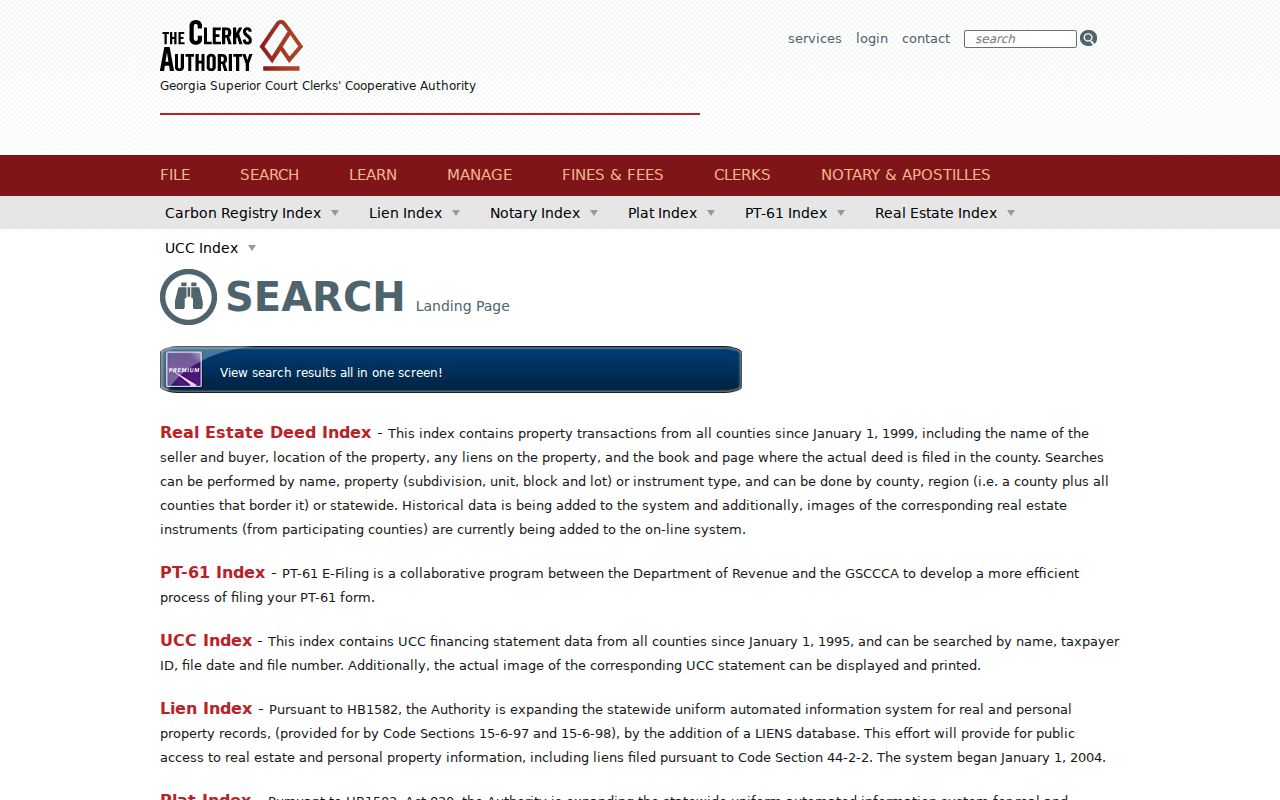
The interface presents the official search entry point. No current Habersham deed result was opened here.
Habersham Grantor-Grantee Chain
Deed records run on parties. The grantor conveys the stated interest; the grantee receives it. To rebuild a Habersham County chain of title, start with the most recent likely grantee. Verify that deed's legal description against the tract. Then flip the prior grantor into a grantee search. Learn how that person or entity first acquired the same land. Each step backward should match the legal description before you move on.
- Find the current assessment name, then search that name as grantee.
- Open the newest matching deed and record its date, type, book/page, parties, and legal description.
- Take the grantor from that deed and search that party as a prior grantee.
- Repeat only when the land description remains consistent; mark splits, estates, and jurisdiction changes.
- Move to books, microfilm, or the counter once the online index no longer covers the year.
- Grantor
- The party conveying the interest.
- Grantee
- The party receiving the interest.
- Chain of title
- The linked sequence of recorded transfers affecting the same land.
- Book and page
- The volume and page reference used to retrieve a recorded document.
Habersham Deeds Before 1999
GSCCCA states that every Georgia county has deed-index coverage from at least January 1, 1999. Older data is still being added. That date is an online floor, not the beginning of Habersham County deed records. The FamilySearch catalog lists Habersham deed books from 1801 through 1901. It also lists general indexes through 1920. Treat the pre-county-looking dates as catalog data, and confirm them with the repository.
Georgia Archives also describes county deed and estate records on microfilm where available. It warns that county boundaries changed over time. Older title work may pull together the Clerk's books, archive finding aids, and the FamilySearch catalog. It may also require records of a parent or neighboring jurisdiction. No authoritative source documents a Habersham courthouse fire or a precise lost-book range. Neither claim belongs in the chain. The historical catalog itself supplies the evidence of that depth.
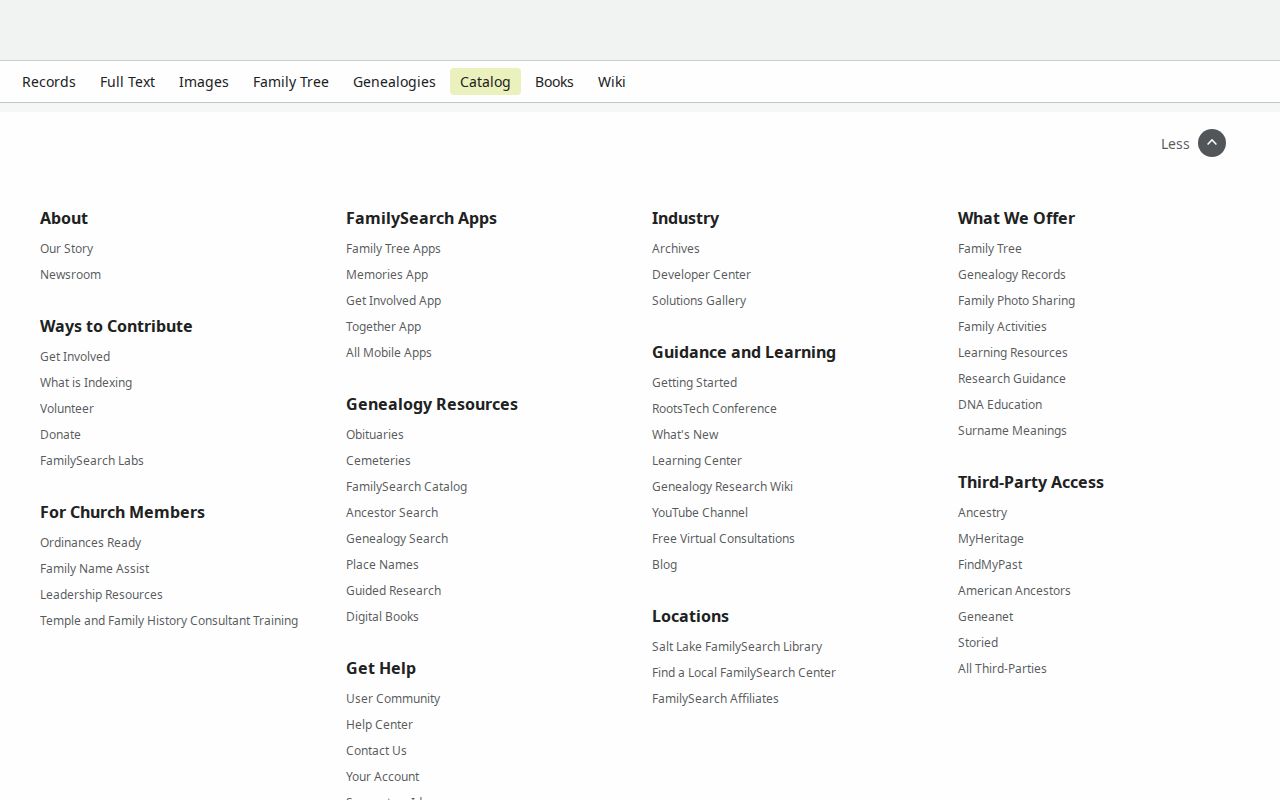
The catalog points to a repository route; each old volume and date still needs direct verification.
Habersham Plats and Descriptions
A deed's legal description may cite a subdivision, lot, phase, land district, land lot, or acreage. It may also cite a prior book and page. The GSCCCA Plat Index carries statewide coverage described from at least January 1, 2004. It can connect a deed reference to a recorded plat image. Not every deed has one.
Published Habersham notices offer search seeds, not current ownership facts. Examples include New Hope Lot 27 at Plat Book 12 Page 136. Shenandoah Meadows Lot 7 sits at Plat Book 14 Page 283. Check the plat and deed images before relying on any lot, owner, or boundary statement. The official Plat Index description spells out this separate plat route.
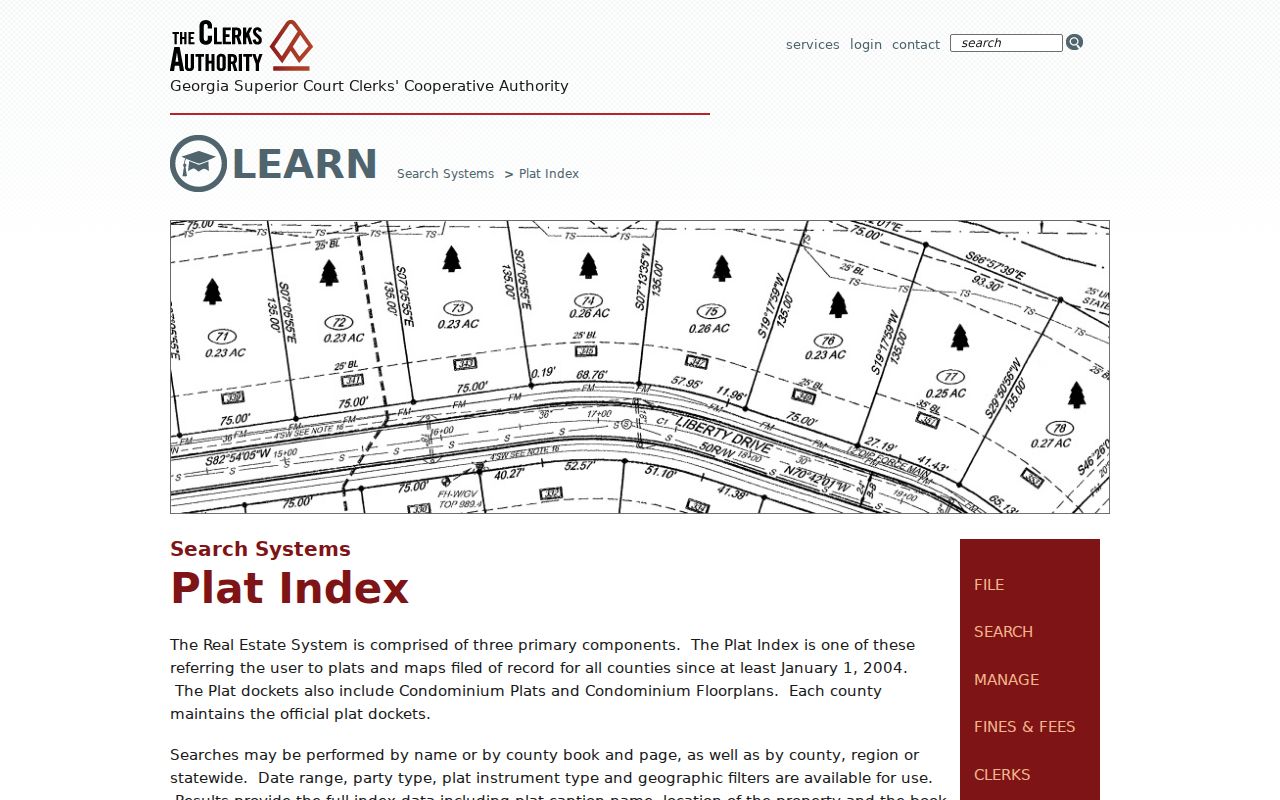
Plat records strengthen lot research. Still, a recorded plat is neither a legal boundary opinion nor a full title chain.
Habersham Deed Liens and Releases
A thorough Habersham County deed search should sweep in security deeds, assignments, cancellations, and liens. Include releases, satisfactions, judgments, and lis pendens too. Georgia commonly secures real-property debt with a security deed. Search both party roles. Keep going past the first filing to catch later releases or assignments.
GSCCCA describes lien-index coverage from at least January 1, 2004. A UCC filing may involve personal property or fixtures. Do not label it a real-estate lien automatically. An assessor owner label, likewise, cannot reveal whether every encumbrance has been released.
Habersham FANS Recording Alerts
FANS watches for new filings for you. The GSCCCA Filing Activity Notification System is free. It works through a one-time email or phone login. Each name request runs for one year. Alerts follow the name index, so coverage has limits. Address notices apply only to PT-61 and UCC address data. Document alerts depend on indexed cross-references.
FANS is not a title monitor. An alert cannot prove an instrument is valid. Treat it instead as an early prompt. Inspect the new filing in the county deed records. Official reporting through June 30, 2025 listed nearly 85,000 users and about 385,000 matches statewide. The official FANS login page displays the email and phone sign-in options.
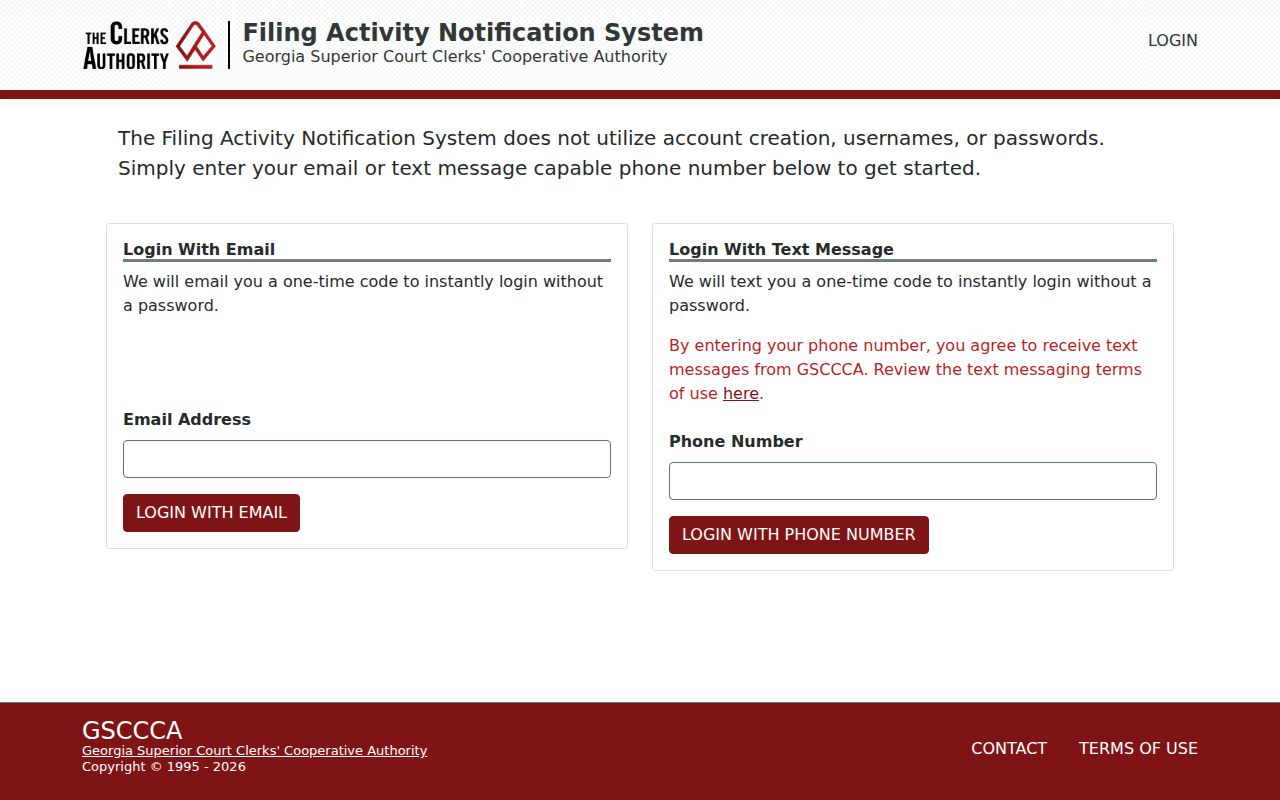
The login screen accepts an email or phone code. Still, an alert only flags activity; it never replaces pulling the deed image and reading the instrument itself.
Copying a Habersham Deed
Start with the online index summary. Open the image if the account allows it. When an image is blocked, missing, or older than the online floor, give the Clerk the grantor, grantee, recording date, book and page or instrument reference, and legal description. Say whether a plain or certified copy is needed. Telephone and counter service are documented options. The current mail procedure and copy fee are not published, so call the office rather than guess.
A certified copy authenticates the document as a clerk record. It guarantees no clear title. For an address-to-parcel lookup before the deed search, run the Habersham County property search workflow first.
Keep the details exact when ordering. Include the county, instrument type, party spellings, recording date, and book and page. Add the parcel number, subdivision, lot, district, land lot, or a prior deed reference if you know it. Those details separate same-name parties. They also distinguish a deed from a security deed, assignment, release, or plat. Ask whether an electronic plain copy works or whether certification demands a different format.
Mail and fax can be practical. The official pages publish no complete order form, fixed deed-copy price, or payment rule, so call first. For records older than the online floor, ask which general index volume covers the date and surname, then request the cited deed book. Archive and FamilySearch images are research aids only. The Clerk holds the county's certified record.
Read the whole image once it arrives. Index data lists parties, date, type, book, and page. The deed itself may hold reservations, exceptions, easements, covenants, prior references, signatures, and notary details. Compare that text with the parcel and the next instrument in the chain. If the property description changes, stop and check for a split, combination, corrective deed, or replat.
Clerk staff cannot certify ownership, interpret a boundary, or clear the chain for you. Request the index entry or instrument itself. Legal conclusions take a title examination, and boundary questions may take a survey.
Recorded, not guaranteed. Habersham County deed records show instruments accepted for recording, not every unrecorded claim or a legal opinion on title.