
How to Find Who Owns a Habersham County Property
One name is only a lead. A layered route works better. Begin at the Habersham qPublic landing page, let the county GIS confirm that the address matches the intended parcel, and finish with the Clerk or statewide deed index to verify the latest grantee.
- Normalize the street address and locate the parcel in the assessor or county mapping route.
- Copy the APN and owner-of-record spelling exactly, including initials, entity suffixes, and co-owners.
- Search the GSCCCA real-estate system for the latest conveyance and compare its grantee, recording date, legal description, and parcel references.
- If the grantee is a company, inspect the official Georgia business record; if it is a trust or estate, follow the appropriate deed or probate trail without assuming a beneficiary.
- Keep the situs address separate from the owner's mailing address, and use the information only for lawful property research.
Three Custodians Answer Three Ownership Questions
Habersham County splits ownership work among three offices. The Board of Tax Assessors tracks ownership for appraisal. The Clerk of Superior Court records the deeds, plats, and liens that carry the legal chain, while the Tax Commissioner handles bills and delinquency rather than title.
| Question | Best first source | Verification |
|---|---|---|
| Which parcel matches the address? | GIS and assessor | APN and legal description |
| Whose name is on the roll? | Tax Assessors | Assessment year and mailing address |
| Who most recently received title? | Recorded deed index | Newest deed image and grantee |
This division keeps the tax records honest. A taxpayer, occupant, former owner, or delinquency defendant never gets mislabeled as the current owner of record.
The Assessor Name Is the Starting Owner Clue
The Habersham County assessor tracks ownership changes, parcel boundaries, zoning use, property characteristics, exemptions, and sales trends. Its qPublic application lets you search by address, owner name, or parcel number. If the application will not load, call the assessor at 706-839-0100 for help.
For a reliable fallback, review the Habersham Tax Assessor page, which lists current access options and contacts for Habersham County property records.
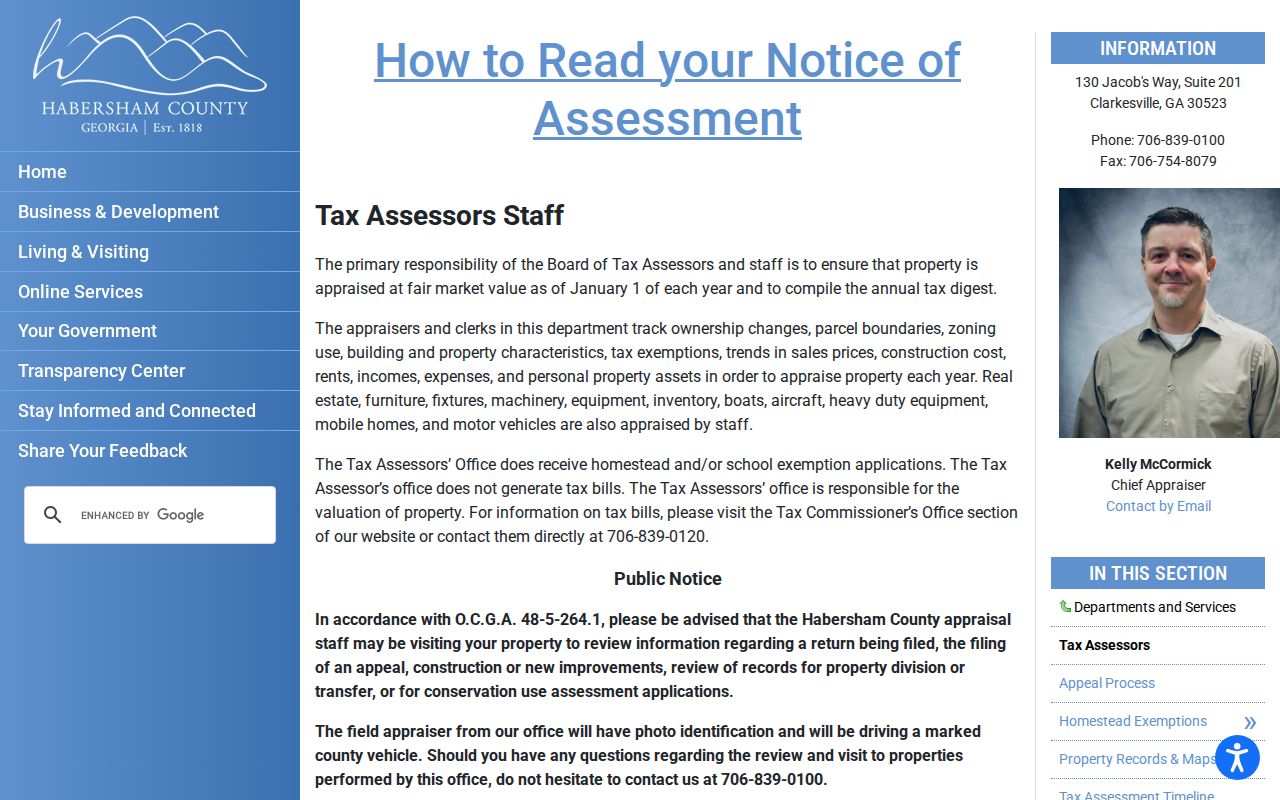
An assessor name is a lead, not proof. Confirm the newest recorded deed before you rely on it.
A Recent Sale Creates a Three-Date Problem
A fresh sale creates three dates to compare. One is the PT-61 or sale date. Another is the deed recording date. The third is the assessor roll or assessment year. Habersham County publishes no standard lag for its roll to refresh, so a newly recorded deed can name the grantee before qPublic shows the transfer.
Recent-sale rule. When dates disagree, treat the assessor name as a lead and inspect the newest recorded deed that matches the same legal description.
For a deeper check, try the current property owner page. Earlier transfers belong on the former owners route.
Where Habersham County Owner Information Is Recorded
No single public screen settles title. Each official source supports only the limited ownership statement it can prove.
| Source | Owner Info It Gives | Access |
|---|---|---|
| Assessor roll | Administrative owner name and mailing address | qPublic or assessor office |
| Recorded deed index | Grantee on the newest matching conveyance | GSCCCA or Clerk counter |
| Secretary of State | Business status, registered agent and filed entity details | Georgia eCorp |
| County GIS | Mapped parcel and roll-linked ownership clue | GIS page or office |
The owner of record may live elsewhere. Mail may go to a different address entirely. An occupant can be a relative, a caretaker, a buyer ahead of a roll update, or another lawful user. Property records support the inquiry, not an inference about who is standing on the land.
Trace an LLC Without Naming a Person as Owner
When a deed or roll names an LLC or corporation, keep that entity as the owner of record. That wording matters. Search the official Georgia Corporations Division eCorp by business name, control number, registered-agent name, or officer name. Filings can reveal a status or service address. They do not make an officer the owner. Trusts carry a similar limit. Record the trust or trustee wording exactly as the deed presents it. Probate and estate transfers may need a separate check with Habersham Probate Court at 295 Llewellyn Street in Clarkesville. An estate file never replaces the conveyance record.
When the Online Owner Search Fails
Online tools do fail in Habersham County. The qPublic application sometimes throws an access challenge. The legacy GIS viewer leads to a missing page. The Clerk's separate KoFile link does not resolve. When that happens, work the fallback chain: call or visit the assessor for the parcel record, use the Clerk's public counter for deeds, and rely on GSCCCA for statewide indexed deed records. The Clerk sits at 295 Llewellyn Street, Suite 110, in Clarkesville. The phone is 706-839-0300. For a record you cannot reach otherwise, file a targeted Georgia Open Records Act request naming the property, parcel number, date range, and document sought. The county promises an initial response within three business days and publishes its copy and retrieval rules.
FANS Watches Future Filings by Name
The free Filing Activity Notification System from GSCCCA sends alerts tied to names, addresses, and document activity. A request runs one year. Renewal is required after that. The system is forward-looking and name-index dependent. It cannot certify ownership or replace a title examination. The official FANS account page is the enrollment point for current sign-in requirements.
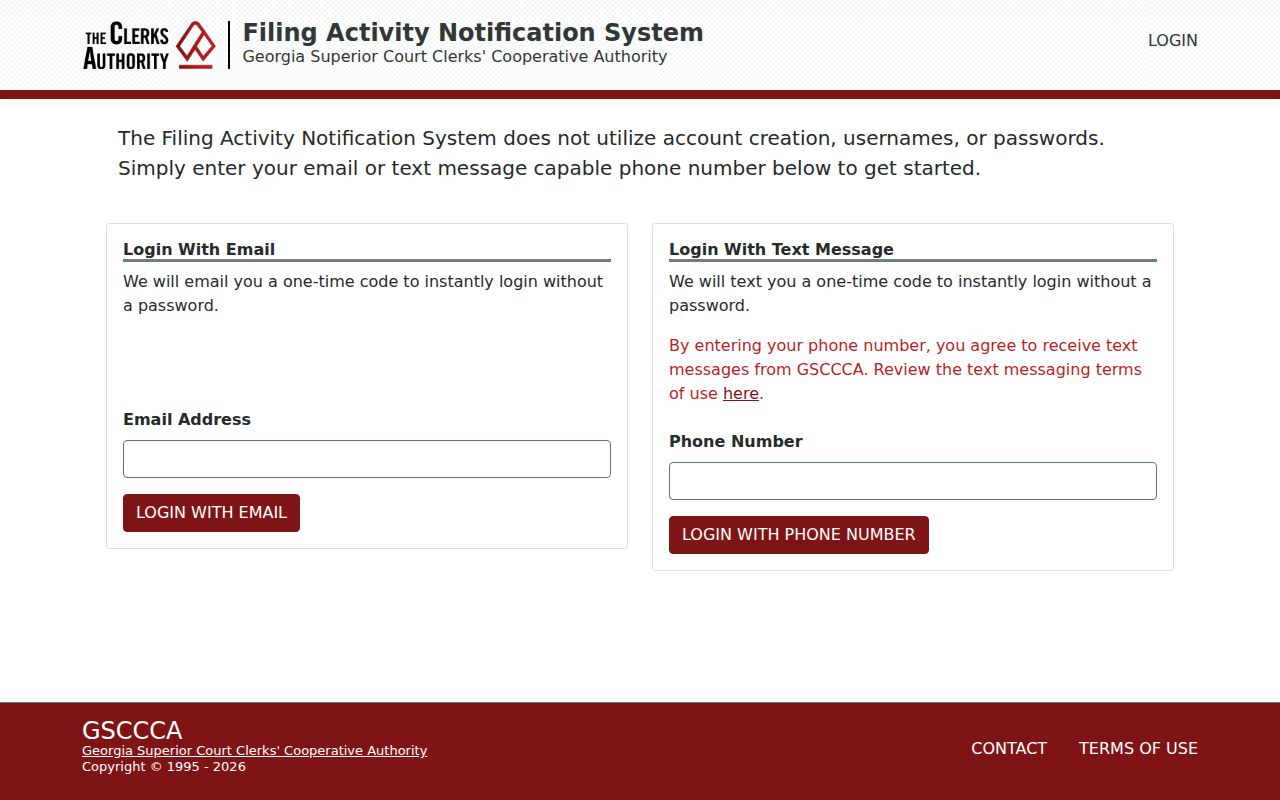
An alert only flags activity for review. It never says a filing is valid or that title changed.
What a Habersham Ownership Lookup Cannot Establish
Public records can carry you only so far. A roll name and a recorded grantee are provable. Unrecorded interests, competing claims, deed validity, probate questions, and easements are not. Georgia Safe at Home and VoteSafe may substitute or protect eligible addresses, and their presence is never a mark of suspicion.
Lawful use. Use Habersham County owner information for legitimate property research, purchase diligence, boundary questions, or history. Never use it to stalk, harass, intimidate, or harm anyone.
- Owner of record
- The name carried in an official administrative or recorded source.
- Grantee
- The party receiving the interest stated in a deed.
- Title
- The legal ownership interest, which a simple index search cannot guarantee.
- Situs address
- The property's physical location, distinct from the owner's mailing address.
For a transaction or a disputed interest, pull the deed images and consult a qualified Georgia title professional. An owner lookup is evidence, not a title opinion.
Match the Owner Name to the Same Parcel
Put together a small evidence card for the parcel. List the situs address, the owner mailing address, and the APN exactly as displayed. Add the subdivision and lot. Add the deed book and page or instrument number, the grantee, the instrument type, the sale date, the recording date, and the assessment year. When a field is blank, mark it "not displayed." Never lift a value from one source and present it as though another source showed it.
Match the legal description too. Parcel strings can carry leading zeroes or letters. Deeds may point to land lot, district, acreage, subdivision, phase, lot, plat book and page, or an earlier deed. Two similar street addresses alone cannot merge records. If the APN shifts, ask what explains the change. A split, a combination, or a map renumbering could be the reason.
Read Entity and Estate Owners Literally
Copy co-owners literally. Take every grantee and the vesting language straight from the deed image. Do not shorten the entry to the first person listed. An LLC works the same way. The entity is the stated owner. An organizer, officer, or registered agent is not automatically the landowner. Preserve exact suffixes and punctuation when searching Georgia eCorp.
Estates need the same care. Compare the probate case with any administrator's, executor's, or assent deed recorded afterward. A will or petition can explain the route, but it never replaces the later land instrument. For a trust, record the trustee and the trust wording exactly, without inferring unnamed beneficiaries.
Recover a Habersham Owner Search from an Older Address
A street address can fail you. Keep rural-route variants alive, and check whether Planning or E911 assigned a newer house number. Habersham County requires assigned numbers to be posted within 45 days. Then search deed records by party name and legal description. Use a plat book and page to work back to the parcel.
A combined tax bill can cover contiguous parcels held in exactly the same names. It does not prove their legal descriptions merged. Ask the assessor or GIS office for every APN and compare each deed separately. This route helps with a new subdivision, a road rename, or an annexation edge. It also works for a property whose mailing city differs from its situs jurisdiction.
Three county offices can show related names without answering the same question. Tax Assessors keep the administrative owner and the value roll. The Clerk of Superior Court records the deed and the legal chain. The Tax Commissioner uses taxpayer information for bills, payments, and delinquency. County GIS may repeat an ownership label as a spatial aid. But that label is not a title record.
Write the source and record date beside every name. The assessor and the newest deed may disagree after a sale. If so, ask whether the annual roll has refreshed. Habersham County publishes no standard owner-update lag in days. The deed stamp is the stronger clue of a current transfer. Still, a full title question can need professional review.