
Trace Habersham County Former Owners by Era
Habersham County former owners live in different record sets depending on the era. For deeds recorded from January 1, 1999 forward, the GSCCCA Real Estate Index is the natural starting point. Historical data keeps being added to it. Before that date, the paper trail shifts. The Clerk's deed books and general indexes take over. Microfilm and archive tools fill the earliest gaps in Habersham County property records.
| Source | Years It Covers | Where Held | What It Shows |
|---|---|---|---|
| GSCCCA deed index | At least 1999 forward | Statewide online system | Parties, dates, instruments and references |
| Habersham deed books | 1801-1901 as cataloged | Clerk and FamilySearch | Earlier conveyances and descriptions |
| General indexes | 1799-1920 as cataloged | FamilySearch catalog | Grantor and grantee routes into volumes |
| County microfilm | To about 1900 where available | Georgia Archives | Deed, estate, and tax context |
Work backward from the latest deed. It names the prior party. It often cites a prior book and page too. Record catalog dates exactly as they appear, even entries predating the county's founding, and add no invented explanation.
Reconstruct a Habersham County Former-Owner Timeline
A worksheet keeps each earlier owner of record tied to the instrument that transferred the parcel. Give every confirmed transfer its own row. Copy the legal-description clue linking that deed to the land in question, and the Habersham County timeline stays honest.
| Transfer date | Grantor to grantee | Deed type | Book, page, or instrument |
|---|---|---|---|
| Newest recording | Prior owner to present grantee | Copy the index label | Record the exact reference |
| Earlier acquisition | Earlier owner to later grantor | Copy the index label | Match the same land |
| Book-era transfer | Names from the reverse index | Read the volume | Preserve volume and page |
A warranty deed, a quitclaim, a security deed, an assignment, and a cancellation each mark a different kind of event. Open the instrument and read it before you label any entry a sale.
Find Habersham County Former Owners in the Deed Index
The official GSCCCA index guide explains the statewide system represented below.
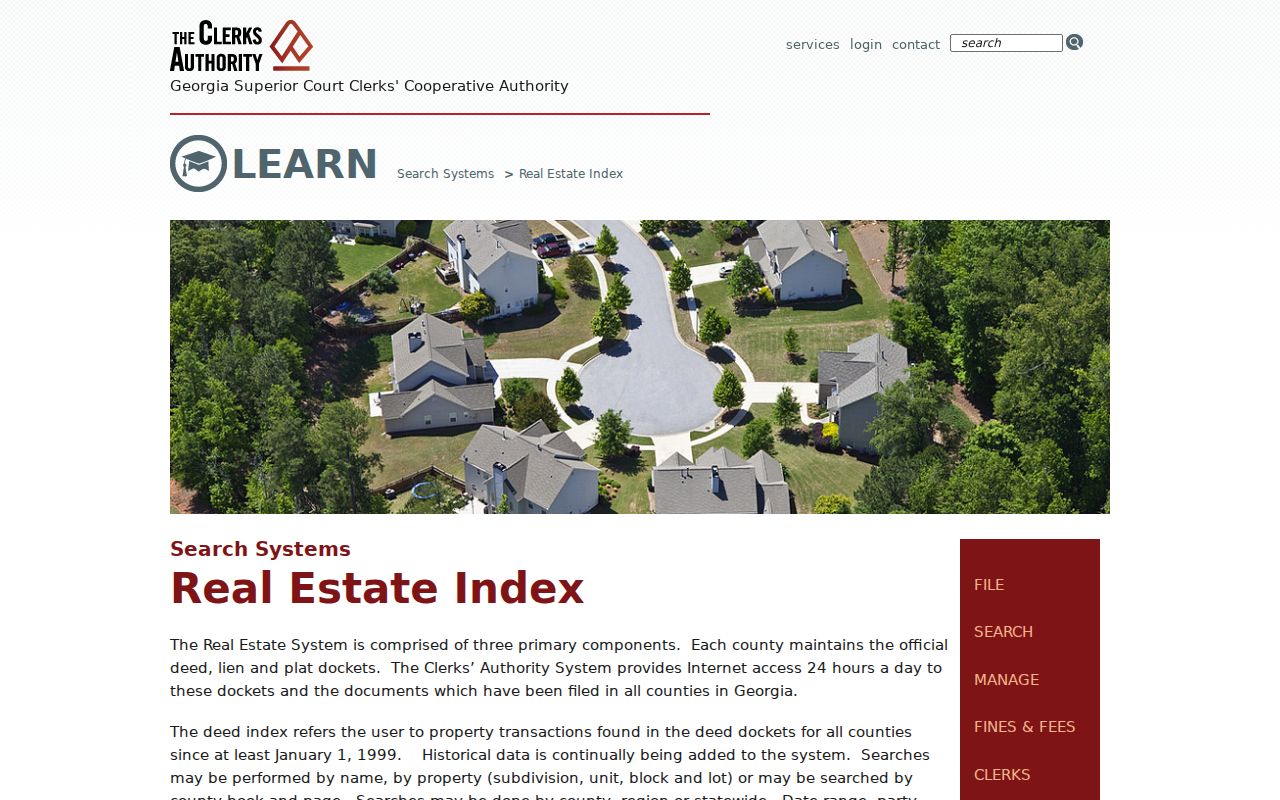
That page works as a directory rather than a parcel result. Use it to reach the deed index, then confirm each historical instrument for yourself.
Walk Habersham County's Former-Owner Chain in Reverse
The Habersham County Clerk of Superior Court is the office that keeps the land records. Names alone can mislead. Parcel number, land lot, district, subdivision lot, acreage, and adjoining-owner clues are what keep a Habersham County chain tied to one piece of ground.
- Find the newest purchase deed with the current party as grantee.
- Copy the grantor, date, description, and prior deed reference.
- Search that grantor as a grantee and confirm the same land.
- Repeat until web coverage ends, then continue in books and reverse indexes.
- Grantor and grantee
- The conveying party and receiving party.
- Chain of title
- The linked sequence of instruments affecting the land.
- Reverse index
- An index used to find a party in the opposite transaction role.
- Legal description
- The land description that persists when street addresses change.
Extend Habersham County Former-Owner Research Offline
Offline sources stretch a Habersham County search past what any single index holds. The FamilySearch Habersham catalog lists deed books for 1801-1901 and general indexes through 1920. The Georgia Archives guide points to deed, estate, and tax microfilm. It also warns that county boundaries can shift over time. When a web result or image is missing, call the Clerk at 706-839-0300 or visit 295 Llewellyn Street, Suite 110, Clarkesville.
A county open-records request, local-history newspapers, and Digital Library of Georgia collections add useful context. None of them replaces the recorded deed. Note: Keep exact names, dates, book and page references, and legal-description clues in every request.
Bridge Habersham Addresses, Splits, and Old Plats
Street numbers in Habersham County come from Habersham E911, which names roads and assigns addresses. Owners, occupants, and agents then have 45 days to post the number. That modern address can sit on land with older deeds. Those deeds rely on districts, land lots, metes and bounds, or a plat. Contiguous parcels held in the same names may even share one tax bill. No recorded merger is needed for that to happen.
Published notices offer useful search seeds. Examples include Shenandoah Meadows Lot 7 and Plat Book 14 Page 283. Another is New Hope Lot 27, Plat Book 12 Page 136. Treat each as a dated lead rather than a current-owner claim. Verify every one against the live plat and deed record.
Follow Habersham County Former Owners to District 13
The Georgia Archives cites an 1819 Habersham District 13 plat as RG 3-3-24. A deep chain can therefore run from a current parcel through deeds to a district and land lot. It can then extend into Surveyor General materials. The plat supplies geographic continuity. That matters when names and road descriptions no longer do.
No authoritative source confirms a Habersham courthouse fire or any precise book-loss year. Skip that story. It does not explain a missing link. Test the Clerk's books, archive microfilm, the FamilySearch catalog, and neighboring or parent jurisdictions first.
Work Through Habersham County Chain Breaks
A former-owner chain seldom runs in one clean line of deeds. Trust transfers, probate estates, and divorce conveyances all drop unfamiliar names into the index. Entity name changes and parcel splits do the same. Read the document type and the legal description first. Only then decide whether the chain actually jumped to different land.
Probate often explains the gap when a former owner died. Habersham Probate Court handles estates and wills at 295 Llewellyn Street in Clarkesville. The Superior Court Clerk, meanwhile, keeps the conveyance record. It later moved the land to an heir, estate, or purchaser. A probate file can show authority to transfer. The recorded deed remains the land-record link you must capture.
Older work needs attention to shifting boundaries. Georgia Archives cautions that county jurisdictions moved over time. An early deed may sit in a parent county or a neighboring county's records. Search the jurisdiction that held power in that period instead of assuming today's lines applied. Late-filed deeds can also surface out of chronological order.
The legal description is the strongest continuity test. Copy the district, land lot, subdivision, lot, acreage, calls, and adjoining-owner names. A tract may have been carved from a larger parcel. Record both the parent description and the conveyed portion then. If parcels were merged for billing, keep the separate deed descriptions. Do so until a recorded instrument legally combines them.
Spelling matters just as much. Search name variants and initials in both transaction roles. Multiple grantees may be indexed separately. An entity can hide under a shortened or former name. These techniques justify widening a Habersham County property search. They counsel against accepting an unmatched result as final.
Preserve your negative findings too. Note the index, date span, spelling, book range, and jurisdiction checked. A zero result means the tested route returned nothing. It does not prove the former owner, deed, or transfer never existed.
Gauge the Depth of Habersham County Ownership Records
Online former-owner coverage in GSCCCA reaches back to at least 1999. Books and general indexes go much further. That web cutoff is not where deeds begin. A Habersham County property chain ends only where the sources stop supporting the link. It does not end where a portal stops displaying results.
A good worksheet records the misses as well as the hits. For each former owner, keep the exact indexed name and role. Note the instrument type and the execution or recording date. Add the book/page or instrument reference. Add the clause tying the property to the next deed. Cite the repository for older material so another researcher can reproduce the step.
Tax rolls and newspapers can corroborate a name's tie to land in a given period. Still, treat them as supporting evidence. An assessment-year label may not match the deed. An abbreviated name or an old place description may not match it either. Local history can explain a road or subdivision name without proving any conveyance.
The 1819 District 13 plat and other Surveyor General records need special care. Distinguish an original survey or grant clue from later private ownership. The archival plat orients the early land lot. It cannot, by itself, supply every intervening former owner. It cannot span every step between that first record and the modern parcel.
Coverage limit. GSCCCA's online deed index reaches at least January 1, 1999. Use deed books, general indexes, microfilm, and archives for earlier owners.
Former-owner work in Habersham County supports house history, estate matters, and purchase diligence. Tie every previous owner to a verified instrument. An address directory alone never proves ownership. A reconstructed chain is not a title opinion, and it does not permit tracking or harassing a living person.